Amidst multiple deadlines I’ve been making my way through some of the films in Turner Classic Movies’ month-long salute to the centenary of the birth of Johnny Mercer, singer and songwriter extraordinaire.
1937’s Ready, Willing and Able introduced “Too Marvelous for Words,” as well as some lesser tunes. (“Handy With Your Feet,” anyone?) “Marvelous” is featured several times, most memorably in the stupendous closing number. When it was excerpted in TCM’s Mercer documentary, Rosemarie began waving her hands in front of her face like a giddy six year old. Ruby Keeler and Lee Dixon, a second-rate Cagney impersonator trapped in Conan O’Brien’s body, dance on a gigantic typewriter with the legs of a bevy of chorines serving as typebars. Based on the words that appear on the equally enormous sheet of paper behind them, it’s a non-QWERTY keyboard.
I just looked down to spell QWERTY. How sad is that?
Hollywood Hotel (1937) gave the world “Hooray for Hollywood,” the tongue-in-cheek anthem that Tinseltown took at face value, belted out by Johnnie ‘Scat’ Davis. The real reason to watch is the Benny Goodman Orchestra performing “Sing, Sing, Sing,” followed by a tight session with Benny, Gene Krupa and Lionel Hampton.
Garden of the Moon (1938) is the least regarded of the three films that we saw, so naturally I liked it the most. Lots of novelty songs here performed by a band that includes Davis, John Payne and Jerry Colonna, among them “The Lady on the Two-Cent Stamp.” The closest thing to a standard on the soundtrack is “The Girlfriend of the Whirling Dervish,” and when I heard it I got a touch giddy myself. Whenever Warner Brothers needed a hint of Arabian Nights mystery in a cartoon, they’d play an instrumental version of this song. Which is unfortunate, because the lyrics show off Mercer’s wordplay at its best.
She’s got her nervish Throwing him a curvish Which, of course, he doesn’t deservish
Astute readers will have noticed I haven’t bothered with plot synopses. All three movies are trifles, showbiz farces with mistaken or bogus identities. There’s just enough story to keep things humming ‘til the next tune starts. Warner Brothers’ musicals owe something to the studio’s signature crime dramas; they’re earthy and sharp, with a kick of bourbon in the meringue. It’s worth noting that these three films, in addition to the handiwork of Johnny Mercer, also share writing by Jerry Wald and Richard Macaulay. They would later pen They Drive by Night and Manpower together, while as a producer Wald would make Mildred Pierce, Dark Passage and one of my favorite backstage dramas, The Hard Way.
TCM has one more night of Johnny Mercer fare airing on Wednesday – after their showing of The Money Trap at 4:15PM EST, 1:15PM PST. I told you there’d be other reminders.
UPDATE: Here’s “The Girlfriend of the Whirling Dervish,” which grows progressively unhinged. It’s still odd to see John Payne singing, considering that I think of him as the lead in noirs like Kansas City Confidential and Slightly Scarlet. Oddly the original choice to star in Garden of the Moon was Dick Powell, who preceded Payne down the boy-singer-to-tough-guy path.
It’s not just one of the best titles of the year. This documentary is also one of the best movies.
The Canadian band Anvil is a pioneer in heavy metal music. Guys from Anthrax, Guns N’ Roses and Motörhead attest to their unassailable awesomeness. The movie opens with rare footage from an epic 1984 Japanese metal fest featuring Anvil’s lead singer Lips wearing a bondage harness and playing the ax with what ‘70s game shows used to call a marital aid.
Many of the acts on that bill went on to achieve success. Not Anvil. A series of bad breaks kept them in the minor leagues, famous only to other musicians and a small circle of fans. But the band keeps rocking. Sacha Gervasi, a screenwriter who was an Anvil roadie in their brief ‘80s heyday, picks up their story as they set aside their day jobs to embark on an extended European tour organized by their guitarist’s girlfriend and then record their thirteenth album.
It’s a real-life Spinal Tap crossed with The Wrestler, following men in their fifties who won’t give up on their dream even in the face of age and common sense. It’s about family, friendship, and the power of belonging to a community. I may have teared up once or twice, but I was banging my head so nobody noticed.
Like all great works of art, Shack Out on 101 functions on several levels.
First, there’s the level at which it’s total shit. The budget for this Red Scare melodrama was so low that virtually all of the action is limited to one set, a California burger stand that has inexplicably become an espionage hotbed. Every scene runs too long, especially the ones that should have been cut. Like the indoor deep-sea fishing expedition. Or the love scene between deeply uninteresting leads Frank Lovejoy and Terry Moore that includes a civics lesson, with a kiss for each branch of government. Or the workout that takes place next to the serving area, in clear violation of any number of health codes, with the participants complimenting each other on how their bodies look with and without clothes. (“Them’s my pecs!”)
Then there’s the level at which the movie’s flaws work in its favor. Sometimes having three sweaty actors wedged into a tight frame shouting at each other does build intensity.
Finally, there’s the Lee Marvin level. As fry cook/spy Slob, his performance is loose and funny until he fires up that gangly, agile menace. When he turns on Moore, I was certain he was going to kill her – not her character, but the actress. He makes this lousy movie crackle with life. You can’t not watch Lee Marvin, even when he’s pimping cigarettes. (H/t to Bill Crider.)
Music: The Bad Plus
The trio is closing out a four-night run at Seattle’s Jazz Alley in support of their latest album, For All I Care. The first half of last night’s fantastic set had the boys performing their usual dense yet delicate instrumental pieces. Pianist Ethan Iverson introduced an original about stunt driving legend Bill Hickman’s love of fruit salad that had an entire movie playing in my head.
Then they were joined by rock vocalist Wendy Lewis for some amazing covers. A spare “Lock, Stock and Teardrops” that included every echo you’ll hear when your lover finally leaves, a version of “New Year’s Day” stripped of bombast but full of passion, a “Comfortably Numb” that can cut through the haze and make any stoner’s hair stand on end. Together, they even found tendrils of twisted longing in “Blue Velvet” that David Lynch somehow missed.
The MTV Music video database expands. Gaspo, this one is for you. Still not enough Adam and the Ants, though. Johnny Depp’s Sweeney Todd look owes something to EBN. It’s amazing we communicate at all. Languages and dialects ...
Busy, busy, busy here at Chez K. There’s always my Twitter feed. It’s amazing how often you can say all you need to in 140 characters or less. But here are some recent discoveries worth a sentence or two.
Ahead of the Curve: Two Years at Harvard Business School, by Philip Delves Broughton. The author, the former Paris bureau chief for the Telegraph, dealt with doubts about the future of his profession by enrolling in the Crimson’s MBA program. His book is an engaging, warts-and-all portrait of an institution with an uncommon amount of global influence; HBS graduates include George W. Bush and Enron CEO Jeffrey Skilling. (OK, that’s not exactly a representative sample. But in light of recent financial events, fuck fair.) If you want to understand how the people who can be said with little exaggeration to run the world think, this book is a good place to start.
The Bigamist (1953). Don’t let the pulpy title fool you. Sadness is the overriding tone of this Ida Lupino film, which I caught on TCM. Edmond O’Brien is a decent, profoundly lonely man who finds different satisfactions from each of his two wives (Joan Fontaine and Lupino, directing herself for the only time). The story is handled in compassionate, humane fashion, right up through the slightly unsatisfying ending.
But the goodwill is almost squandered in a strange reflexive moment. Miracle on 34th Street’s Edmund Gwenn is cast as the adoption agency employee whose investigation causes O’Brien’s double life to unravel. It’s already tempting fate to have Fontaine say that he looks like Santa Claus. But when a Hollywood tour guide blithely announces that the bus is now passing the home of actor Edmund Gwenn, that’s a stunt even Charlie Kaufman would steer clear of.
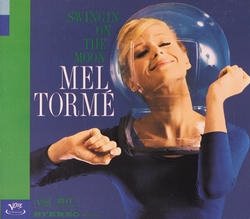
Moon & Sand. This Rhapsody channel dedicated to West Coast jazz of the ’50s and ’60s was off the air last week, stranding yours truly at his wit’s end. It’s my daily soundtrack. Recently it introduced me to my new favorite song, ‘Swingin’ on the Moon’ from Mel Tormé’s album of the same name. It features the immortal lyric “Tell mater and pater/We live in a crater.” And dig that crazy cover art.
With the election over, you’re no doubt on the hunt for prime time-wasting opportunities. Look no further than MTV Music, a database of almost 20,000 videos. It’s already yielding surprises. More to the point, it has finally delivered unto me my own personal white whale.
For years I have been obsessed with the 1986 video for “American Storm” by Bob Seger. Not the straight performance version that occasionally surfaces on VH1 Classic or is easily found on YouTube. No, I mean the video featuring scenes from an action thriller with an all-star cast including James Woods, Scott Glenn, Randy Quaid and Lesley Ann Warren.
The only problem is ... the movie doesn’t exist.
The “scenes” were shot exclusively for the Seger video. To this day I have no idea if this was intended as post-modern commentary on the then-standard practice of using videos as film promotion tools, or just a really, really bad idea.
I hadn’t seen that version of “American Storm” since high school. Thanks to MTV Music, I present it to you now.
As if that’s not enough, you can also enjoy an absolutely pristine copy of “Crucified” by Army of Lovers. My first wife has never looked so good. The minx.
The Black Scorpion (1957). This low-budget creature feature was our Halloween evening entertainment. Ignore the scorpions’ “faces” and focus instead on the tremendous stop-motion work by Willis O’Brien and Pete Peterson. No less an authority than Michael Weldon’s Psychotronic Encyclopedia of Film (now celebrating its 25th anniversary) says: “The terrifying huge scorpions make the monsters in most other films look pathetic.” Star Mara Corday is so much of a ringer for Gina Gershon that it lends a whole new layer of meaning to the proceedings.
The movie has a special place in my heart because of the circumstances during which I first saw it. I was nine years old, visiting family in Ireland with my mother. She noticed that the movie would be coming on at two in the morning and suggested that we watch it together. Sure enough, she woke me at 1:45 AM with tea and cookies at the ready. I sat with her in my grandfather’s living room watching giant scorpions rampage across Mexico, then went back to bed and slept like an angel. It’s funny to think she had me figured out that early.
Pride and Glory (2008). After all the trouble this movie had, it’s almost unfair of the New York Times’ Dan Barry to have a go at it in an admittedly funny piece about the depiction of Irish Catholic New York cops. But Pride and Glory can take the heat. It doesn’t break new ground, but director/co-writer Gavin O’Connor, the son of an NYPD officer, knows the terrain and gives it a gritty, lived-in texture. Colin Farrell continues his string of terrific performances. Jon Voight’s teary Christmas dinner speech would be right at home in any number of Keenan family gatherings. I could have done without the reel on the jukebox during the bar fight. But the one cliché that did stand out – Edward Norton’s character living on a boat – has nothing to do with being Irish, and O’Connor takes pains to justify it. Smart, solid filmmaking.
Two hours of solid, entertaining superhero action. Rosemarie, who knows about this kind of thing, assigns bonus points for Tim Blake Nelson’s performance as the most believable movie scientist in a long time. Louis Leterrier has directed four films including The Transporter and its sequel, plus the woefully underrated Unleashed with Jet Li and Bob Hoskins. I like ‘em all.
Music: James Hunter, The Hard Way
Perhaps, like Carl Carlson, you have asked, “How ‘bout some new oldies?” If so, ask no more. The latest album from James Hunter is out, and it’s like a wormhole has opened to the early 1960s, pumping out original music with that vintage sound. Part soul, part R&B, all tasty. Give it a listen.
Yeah, I should have just thrown up an Army of Lovers placeholder post. Busy, busy, busy. Multiple projects, staggered deadlines, etc.
I did have a night off yesterday, and marked the occasion in style by seeing the Kenny Barron Trio at Jazz Alley. Featuring Kenny Barron on piano, Kiyoshi Kitagawa on bass, and Francisco Mela on drums. The trio has a lively onstage dynamic. Mela is wildly expressive, his joy in performing unbounded; Rosemarie and I both called him the Jose Reyes of percussion. Kitagawa is the steely virtuoso, while Barron simultaneously hangs loose and rides herd. The result was a fantastic, supple set. I knew I was in for a good time when Barron introduced the opening number, the standard “Beautiful Love,” by saying that Benny Golson had told him the song was featured in The Mummy with Boris Karloff.
I’m on deadline, meaning I’ll be taking a sabbatical for the next few days. Lucky for you it’s Sinatra month on Turner Classic Movies, so you have this widget to tide you over ‘til I return.
UPDATE: Initially I embedded the widget, but it starts automatically and I hate that. So you can find it here.
The High Society number with Bing Crosby is a favorite. TCM is also airing some of Frank’s TV specials on Sunday evenings at 8PM Eastern and Pacific. I’m waiting for his 1967 show with Ella Fitzgerald and Antonio Carlos Jobim, which airs May 18.
With Brian Koppelman, David Levien has written several entertaining movies, among them Rounders and Ocean’s 13. His first foray into crime fiction ventures into some truly dark territory.
In suburban Indianapolis, 12-year-old Jamie Gabriel disappears while on his paper route. Over a year later, the police are no closer to finding him and the marriage of his parents Paul and Carol is on the verge of collapse. Out of desperation and resignation the Gabriels hire Frank Behr, a brooding ex-cop with a tragic past. Behr’s investigation will yield reasons for them to hope – and to despair.
There are a few plot developments that strain credibility, and the ending is a lot to swallow. But I went along with it, because Levien knows how to power through a story. He also peoples it with a strong gallery of characters. Not just Behr and the Gabriels but the range of criminals responsible for Jamie’s abduction, all of whom are given some shred of humanity.
In a recent essay, ESPN’s Bill Simmons names Rounders as one of the only classic sports films of the past decade. Which raises the question: is Rounders a sports movie? Feel free to respond in the comments.
A few years ago, Simmons did a twopart Q&A with Koppelman and Levien. Glad to hear that my reaction to Rounders is fairly typical. First time around you can take it or leave it, mainly because the poker scenes leave you in the dust. But for some reason you’re compelled to watch it again, and the lingo makes more sense. By the third viewing, you’re completely on board. And that ending is still ballsy.
Music: Brad Mehldau Trio: Live
I have reached some kind of jazzbo milestone. The new album from the trio – Mehldau on piano, Larry Grenadier on bass, Jeff Ballard on drums – was recorded during an October 2006 run at New York’s Village Vanguard. Rosemarie and I were at one of those shows. Which means that could be us you hear applauding. Only I didn’t applaud. I snapped my fingers beatnik-style and then requested “Freebird.”
Do The Math, evolving from The Bad Plus’s blog into a music ‘zine, collects answers to a questionnaire in which jazz luminaries and critics name interesting TV themes, movie scores, hip-hop tracks and more. Who knew the music from The Price Is Right contained such harmonic depths?
So the New England Patriots make it to another Super Bowl, this time with a chance at a perfect season. It’s only appropriate on this day that we pause to remember a musical moment from the team’s not-so-distant past. In 1985, the Pats squared off for the NFL championship against the last team to flirt seriously with perfection, the Chicago Bears. Everyone remembers the Bears’ ‘Super Bowl Shuffle,’ as well as they should; talk about your harmonic depths. But the Patriots also had a song. I give you the overlong and grammatically incorrect New England, The Patriots And We.
Linking to this may be an attempt to jinx New England. I honestly don’t know.
Now that’s what I’m talking about. This Johnny To double-bill, available on DVD, has it all: drama, action, suspense. It’s an epic told with economy. You can watch both films in a little over three hours.
Election lays out its premise in a handful of galvanizing scenes. Every two years, the gangs of Hong Kong choose a new chairman. The upcoming race is between Lok (Simon Yam), a steady hand who has planned his ascension for ages, and Big D (Tony Leung Ka Fai), the wild man who’s generating a lot of income for his bosses. The campaign involves both politicking and extreme violence; I, for one, wish they’d deploy the same tactics in the Iowa caucuses. (If they did, Hillary would win in a landslide.) Nothing goes as you’d expect; Lok is more ruthless than he appears, Big D understands the wisdom of compromise, and the ending is a shocker.
Triad Election is darker and more disjointed than its predecessor, but ultimately cuts deeper. It picks up the story at the end of Lok’s term. (That might sound like a spoiler but trust me, it’s not.) Naturally, he wants one of the protégés who helped him secure power to succeed him. But his choice, Jimmy (Louis Koo), declines. He only joined the triads to further his business interests, and he’s about to close a deal in China that will make him completely legitimate. Lok decides to buck tradition and stand for reelection. As Lok amasses supporters and enemies, Jimmy learns his deal has been torpedoed by the Chinese government. They will reinstate it under one condition – that he challenge his godfather for the chairmanship.
The emphasis of the Election films isn’t on action, although To’s muscular and insinuating direction delivers the goods when the mayhem occurs. (Especially in Triad. Ouch.) The movies are about strategy, about how gaining authority and maintaining it require different skills. Mainly, though, they’re hugely entertaining, some of the best filmmaking I’ve seen this year.
Can’t disagree with the main choices. Barbra Streisand’s ‘Jingle Bells?’ is so insidious that in high summer, apropos of nothing, I have turned to Rosemarie and said, “Upsot?” I didn’t think ‘Grandma Got Run Over By A Reindeer’ was funny when I was eight, and that’s the target demographic. I do like Bruce Springsteen’s cover of ‘Santa Claus Is Coming to Town,’ though. John Lennon and Yoko Ono’s ‘Happy Xmas (War Is Over)’ turns up on the beloved list. I heard that song the other day and realized that I’ve always hated it, and I always will.
My Yuletide playlist is pretty short. Anything by the Rat Pack, with Dean Martin’s A Winter Romance being a particular favorite. Vince Guaraldi’s soundtrack for A Charlie Brown Christmas. And of course the greatest Christmas song ever, ‘Fairytale of New York’ by the Pogues with Kirsty MacColl.
Those selections should make it abundantly clear I’m not a holiday kinda guy. Stop by scrubbles.net, where Matt has assembled a more upbeat seasonal mix.
And finally, because this is too good to leave in the comments, Rosemarie took over where I left off yesterday. In honor of Shane Black, here’s our version of ‘The Twelve Days of Christmas.’
Twelve cars exploding Eleven extras running Ten tankers skidding Nine strippers pole-ing Eight Uzis firing Seven henchmen scowling Six choppers crashing
Five silver Glocks
Four ticking bombs Three hand grenades Two mortar shells And a suitcase full of C-4
On November 13, novelist James Ellroy served as guest programmer on Turner Classic Movies. Among his selections were three relatively unheralded crime dramas, all from 1958, all set in California, all new to me.
It took a while, but I finally made my way through them. Feature it: we’re firing up the time machine and journeying back to the Golden State, when everybody claimed to like Ike but secretly sought sanctuary in shadow. It’s gonna be a gas.
First up is Stakeout on Dope Street. A trio of teenagers (including Little Shop of Horrors star Jonathon Haze and Yale Wexler, brother of cinematographer Haskell) stumble onto two pounds of pure heroin from a busted drug buy. They set an aging hophead to work selling the stuff and next thing you know, according to the out-of-place voiceover, they’re pricing “bongo drums and other racy items.” But Yale’s gal Abby Dalton wants no part of his dirty money, and the cops and drug dealers are hot on their trail.
Dope Street is a bargain basement production with a half-baked script; the JD scenes fall flat. But it’s also a crudely effective piece of filmmaking. There’s an extended withdrawal sequence that’s still harrowing, and director Irvin Kershner uses unexpected edits and camera angles to maximize tension. It’s no surprise he went on to better things. The movie also has a solid jazz score and the night’s best credit: Bowling Technical Assistance by the Redondo Recreation Center.
Murder by Contract has two things in common with Dope Street: a low budget and actor Herschel Bernardi. The similarities end there. Vince Edwards stars as a hired killer who takes up his trade solely to buy a house for himself and his unseen girlfriend. He’s sent to L.A. to eliminate a witness and has a crisis of conscience when he discovers his next target is ... gasp! ... a woman.
Objectively, Murder by Contract is terrible. Three reasons why, off the top of my head:
1. A drab look, shot in weirdly underpopulated Southern California locations;
2. A thin script packed with pretentious “psychological” dialogue, all delivered by the charisma-impaired Edwards;
3. The worst soundtrack in film history.
And yet ... the movie’s sheer lousiness and its struggle to say something exert their own fascination. Ellroy’s right in observing that its vision of the hit man as an existential figure is years ahead of its time. I can easily see how it would have made an impression on him as a young man.
ASIDE: Thanks to Ben Casey, Edwards was one of the biggest TV stars of the 1960s. Now he’s been banished to total cultural insignificance. I’ve never seen him in anything other than this movie. (Ed. note: I stand corrected. Please see the comments below.) Audiences actually bought this guy as a neurosurgeon? At least now I get another Simpsons joke. The show’s melodramatic veterinarian was drawn to look like Edwards.
The final ’58 film, The Lineup, is by far the best of the bunch. It’s based on a then-current TV series, a San Francisco version of Dragnet. The opening scenes suffer for hewing close to the show’s format. Two uninteresting cops investigate a bizarre incident at the docks and realize that unsuspecting travelers are being used as drug mules for the Syndicate.
It’s when the villains turn up that Stirling Silliphant’s script kicks up the kink. Eli Wallach, in only his second film, is the man tasked with retrieving the dope at all costs. He travels with an older “associate” (Robert Keith) who records the dying words of each person Wallach kills. Their relationship officially out-creeps anything I’ve seen in a dozen more recent, “edgy” crime dramas. There’s also nice work from Richard Jaeckel as a cocky getaway driver with a drinking problem.
Don Siegel, who knows his way around San Francisco, directs. The climax includes some shocking acts of violence and a dazzling car chase on the highway system then under construction. But it’s Siegel’s throwaway use of everyday locations that elevates the movie. A single shot of Jaeckel parking a sedan in front of a freighter that begins pushing away from a pier is a thing of beauty.
Overall, some great picks by Ellroy that highlight his influences and provide an X-ray of a young author in development. And that depresses the hell out of me. Movies like this, that don’t skimp on the mayhem but always show the toll it takes, are in short supply these days. Where is the next generation of crime writers supposed to get their fix of human-scaled sex and violence?
Miscellaneous: Links, No Country For Old Men Edition
See the movie. It’s a hell of a ride. Then you won’t mind the spoilers in the AV Club’s comparison of book and film. Nora Ephron also puzzles it out.
Music: Wolfgang’s Big Night Out, by the Brian Setzer Orchestra
The BSO typically gets a few spins around Chez K come the holiday season. We like our Christmas music up-tempo around here.
I was about to fire some up in Rhapsody the other day when I discovered their latest album, in which classical music staples are retooled for a sixteen-piece big band. It’s been playing ever since.
In the BSO’s hands, Tchaikovsky’s best-known composition becomes ‘1812 Overdrive,’ and the traditional wedding march from Wagner’s Lohengrin is reborn as ‘Here Comes the Broad.’
My personal favorite is Beethoven’s ‘Fur Elise’ served up with Django Reinhardt flair. It wouldn’t be a BSO record without a Christmas song, and their version of ‘God Rest Ye Merry Gentlemen’ – here called ‘Take a Break, Guys’ – doesn’t disappoint. It sounds like the title song from a lost Quinn Martin series. (“Tonight’s episode: Naughty or Nice.”)
Sure, it’s a concept album, but one stuffed with great musicianship and witty orchestrations. I particularly appreciate the endings; there is no piece of music than cannot be improved by the addition of ‘Shave and a Haircut.’
News: Strike Stuff, Late Night Edition
No Daily Show? No problem. The writing staff goes guerilla-style straight from the picket line.
And David Letterman’s writers have started a blog chronicling the strike from an East Coast perspective.
It’s not a festival if you only go once. Earshot Jazz continues, so we ventured out for another show.
Fred Hersch is one of America’s premier jazz pianists. He recently wrapped up what sounds like an extraordinary series of duet concerts with some of my favorites like Brad Mehldau and Ethan Iverson, and his latest album Night and the Music is a gem. He took the stage in Seattle with bassist Ben Street and drummer Nasheet Waits for a set that included some Ornette Coleman, a mini-tribute to Wayne Shorter, and original compositions that aren’t afraid to be lyrical.
Does it sound like I have any idea of what I’m talking about? Because I don’t. Not really. I’m still at the low end of the jazz learning curve, looking forward to making my way up.
In an unusually active month of concert-going, I’ve seen jazz performers ranging in age from late-20s to a still-spry 80. That’s one of the things I love about the form; if you can bring something to the party you’re more than welcome, no matter how young or old you are. It’s a life’s work.
That openness, I’ve realized, is true of other things that interest me. Like crime fiction. And baseball; plenty of the players from my childhood extend their careers in the game as coaches, scouts or managers.
These pursuits also share a healthy respect for the past that never shades over into reverence. ESPN’s TV coverage of the Joe Torre story mentioned Wilbert Robinson as one of the only other people to manage both the Yankees and the Dodgers, even though in Wilbert’s day the Yankees were in Baltimore and the Dodgers in Brooklyn. The cocktail world, one of my other passions, also has that sense of tradition. There’s nothing like a forgotten drink rediscovered by a contemporary bartender.
Chalk it up to premature old man-ism, but I like things where the current practitioners recognize that they are only temporary custodians of their art. Stop worrying about creating something new, and maybe you can create something good.
Miscellaneous: Halloween Links
Tony Kay compares the Rotten Tomatoes scary movie list with his own. At Shoot the Projectionist, results of a month-long horror film survey are in. And Jim Emerson offers a great list of four overlooked scary movies on DVD.
One of the damnedest movies I’ve ever seen makes a rare TV appearance this week. Deadline at Dawn (1946) screened at this year’s Noir City festival. It marks a wild confluence of talent – Clifford Odets adapting Cornell Woolrich for Harold Clurman, the founder of the Group Theater directing his only film. It airs this Tuesday, October 30, on Turner Classic Movies at 11:45 PM Eastern. It’s worth setting the DVR for.
Music: Terrasson/Vasandani
Seattle’s Earshot Jazz Festival is in full swing, and this year I’m finally making good on my annual promise to take in some shows. Not that I’m going to write about them at length. When it comes to jazz, I’m still a neophyte who doesn’t know what the hell he’s talking about. I’ll just tell you who I saw and leave it at that.
I’m all about piano, so Jacky Terrasson was at the top of my list. His solo set was the second such show I’ve seen this month after Martial Solal at the Village Vanguard in New York. (Oddly, each offered an idiosyncratic version of ‘Take The A Train.’) Terrasson is an intense performer who attacks the piano from a variety of angles, using it as a percussion instrument or reaching inside for a harp-like pluck of the strings. The sound that results is incredible. His ‘America The Beautiful’ is a haunting reverie, while his impassioned take on ‘You’ve Got A Friend’ wrings powerful emotion from a song that I’ve previously never liked. Both tracks are available on his fine new album Mirror.
The opening act, singer Sachal Vasandani, has a warm, supple voice and a way with standards (‘Baby, Don’t You Go Away Mad’) and original material (‘Storybook Fiction,’ a charmer you can hear at his website). A good night all around.
Nerve has a threepartseries on the best fictional presidents in film. How they could overlook Richard Belzer in Species II and Roy Scheider in Chain of Command is beyond me.
Greetings from New York City. My first post from the road almost came in the wee hours of the morning, but I couldn’t get decent internet access at Sea-Tac Airport. Our red eye flight east was delayed due to weather. Takeoff was pushed from a hair before midnight to three AM. It’s strange to have a normally bustling superstructure all to yourself. Most of the other passengers decided to go to sleep, the automated announcements echoing off the walls not disturbing their slumber. Rosemarie and I ended up commandeering an empty section of terminal and playing charades using the longest titles we could think of. Been Down So Long It Looks Like Up To Me, If It’s Tuesday It Must Be Belgium.
Fortunately, the delay didn’t throw a crimp into our evening plans. We were reasonably bright-eyed and technically bushy-tailed when we went to see Martial Solal, one of the world’s foremost jazz pianists, celebrate his eightieth – eightieth! – birthday with one of a week’s worth of solo shows at The Village Vanguard. Solal is only the second performer honored with a run of such sets. (Fred Kaplan has a great summary of Solal’s career. It was Kaplan’s review of NY1, an album Solal recorded during a lonely run at the Vanguard after September 11, 2001, that sparked my interest in Solal’s work.)
The show was an absolute joy, a celebration in every sense. Solal toyed with a battery of standards – “Body and Soul,” “Tea for Two” – with the energy and ingenuity of a man half his age, but also with the ease of a performer who no longer has to prove himself. It was like eavesdropping on a master noodling on the piano in his study, playing for his own amusement. Occasionally I could glimpse a small smile creeping across Solal’s face, vanishing as soon as another notion occurred to him. “I tried to play ‘Cherokee,’” he said at one point, shrugging helplessly. His rendition of “On a Clear Day You Can See Forever” was infused with the memory of a lifetime’s worth of clear days. Quite the memorable start for our trip.
Meet my new favorite book. Jancee Dunn is a Jersey girl who ended up a Rolling Stone correspondent and a VJ on MTV2, back when the network used to play videos. (Hard to believe there are now two MTVs against which that charge can be leveled.)
Her memoir, which is hysterical and reads like a breeze, is studded with tips on how to interview celebrities. Examples: always chat up the drummer when talking to a band, and drivers provide the best gossip. But the most interesting sections are about Dunn’s own life. Her suburban childhood. Her close-knit family with its possibly too-strong ties to J.C. Penney. (I still remember Dunn introducing “a video from, as my dad would say, Mary J. Bilge.”) And her eventual realization that “being hip was a full-time job, and (she) was only a part-timer.” Dunn pulls off the neat trick of being more interesting than the luminaries she’s paid to write about.
The new crop of shows covering the celebrity beat seem hell-bent on taking them down. In Slate’s words, they’re either about hostile intimacy or intimate hostility. Try to steer clear of the press, as Matt Damon does, and you get taken to task by the editor of Variety. (Peter Bart should read the disturbing section of Dunn’s book in which Ben Affleck demonstrates to her how quickly a routine task like getting lunch is wrecked by paparazzi.) Which is another reason why I enjoyed But Enough About Me. It’s refreshing to read about someone regularly exposed to fame who seems so ... normal.
Miscellaneous: Link
I’m depressed that the boys in the the Bad Plus even feel they have to explain how their improvisational covers of modern songs are not ironic. Anyone who’s heard their electrifying version of “Tom Sawyer” should know better.
Anka’s at it again, recording another album of comtemporary(ish) songs in his own style. I was a big fan of Rock Swings, his first such album. In my mind Anka’s rendition of “Eye of the Tiger” has now replaced Survivor’s as the definitive one, and yes, I am fully aware of just how small a boast that is.
The follow-up record isn’t as good, because of song choice. Foreigner and Bryan Adams simply aren’t as interesting as Nirvana and Soundgarden no matter how elaborate the arrangement.
There are some good tracks, like Anka’s take on Duran Duran’s “Ordinary World.” The highpoint is easily his version of “Mr. Brightside” by The Killers. That’s a song with enormous personal significance for me, and one that demands to be sung over a full orchestra. Anka does it proud.
TV: Entourage
Rosemarie, as last night’s season finale was beginning: “I hope Billy Walsh gets killed by Basque separatists while they’re in Cannes.”
Miscellaneous: Links
In preparation for the upcoming remake of 3:10 To Yuma, the AV Club rounds up 17 dark westerns.
This New York Times Magazine profile of Rick Rubin is long but, in the words of The Bad Plus guys, “essential reading for anyone with the faintest interest in the music industry.”
Miscellaneous: The August Stuff-I-Didn’t-Get-To Post
Forever Cool, Dean Martin. Enough with the albums where dead singers “duet” with contemporary artists. Dino did more than enough entertaining when he was with us. Let the man rest in peace. That said, at least this album includes some of Dean’s in-studio banter and revives the movie theme “Who’s Got The Action?,” performed here with Big Bad Voodoo Daddy. Robbie Williams again shows he knows his way around a standard. And Kevin Spacey earns points for chutzpah – or something – for singing with Dino as Dino.
Stalin’s Ghost, by Martin Cruz Smith. I never miss an Arkady Renko book. In this latest outing, the good-hearted Russian detective is assigned to investigate subway sightings of the title specter only to find himself drawn into post-Soviet politics and the repercussions of Chechnya.
Ask The Dust. Colin Farrell is terrific in Robert Towne’s adaptation of the John Fante novel. The bantam rooster strut, the self-doubt expressed as hostility; I actually believed I was watching a struggling writer in 1930s Los Angeles. The movie never fully escapes its literary origins, but that’s part of what makes it interesting. Also excellent: the letters Farrell’s character receives from his mentor H. L. Mencken, read in the vinegary rasp of film critic Richard Schickel.
This Is Tom Jones. No sooner had I picked up the first disc in this series of variety shows than Tony Kay recapped ‘em all, proving great minds really do think alike. The women’s lib sketches with Anne Bancroft alone make this worth a rental. I was struck by how much the 1969 Tom Jones looked like one of those deadly clotheshorse thugs that turn up in U.K. gangster films like Get Carter and The Long Good Friday. Time-Life should have done a better job of editing the shows. It’s not nice to promise Joey Heatherton and then not deliver. Not nice at all. So here’s Joey doing her all to sell mattresses.
I didn’t get to a lot of stuff this month, so I’m breaking this post into two parts.
Flight of the Conchords. This is exactly what HBO needs after all those series that pushed the envelope: one that barely tries. To paraphrase The Limey, it’s more of a vibe than a show. I’ve watched every episode twice for the music alone. Exhibit A: The Robot Song.
Man Vs. Wild. Former British soldier Bear Grylls, equipped only with an unusually large knife and a camera crew, is dropped into the world’s most hostile environments. A glacier in Iceland, a canyon in Mexico, the English department at a small liberal arts college. I basically tune in every week to count all the ways in which I’d already be dead. Knowing the names of all the James Bond villains and the actors who played them – in order – is apparently not a survival skill. It doesn’t even impress women.
Pink Martini. After reading a rave review of this band, which does lounge music with an international flavor, I looked them up on Rhapsody. Only one of their songs, “Sympathetique,” was available. Rosemarie was kind enough to translate the chorus:
I don’t want to work I don’t want to eat lunch I only want to forget And then, I smoke
Rosemarie also said, “I bought their new album. This sounds like a band we need to get to know.” As usual, she was right.
I can only hope that fried peanut butter and banana sandwiches taste fantastic, and that Elvis Presley enjoyed every one. Because eating them didn’t do the King any favors. Poor dining habits did more than end Elvis’s life. They went a long way toward erasing his legacy. Much of an entire generation knows only the Fat Elvis, the cartoon Elvis, the punchline Elvis.
That’s largely how I knew Elvis, too. The only one of his movies I’d seen in its entirety was Viva Las Vegas, and that was due to the presence of Ann-Margret.
Then, one night a few years ago, the restored version of the 1970 concert film Elvis: That’s The Way It Is aired on TV. “Think I’ll check out a little E,” I told Rosemarie, putting on the drawl I’d cribbed from legions of bad comics. Rosemarie said she was going to read the newspaper instead. By the second number the paper was down for good and we’d both seen the light: Elvis was one of the great showmen of all time. Not to mention a helluva singer.
And That’s The Way It Is ain’t even Elvis at his peak. For years I’d heard his ’68 Comeback Special described with religious reverence. The Beatles and the Rolling Stones had taken the stage while Elvis was off making Kissin’ Cousins and Roustabout. The ’68 special made him relevant again, and in many respects set the stage for his sad decline. I figured it was high time I checked it out.
From the first arresting close-up of Elvis launching into “Trouble” (“If you’re looking for trouble/You came to the right place”), it’s apparent you’re not watching any ordinary TV one-off. No guest stars, no awkward comedy banter. Nothing but Elvis doing what he does best – and thus reintroducing himself to the world – for a solid hour.
It’s an amazingly loose show. When there’s no strap to be found for his guitar during one of the “black leather concert” segments, Elvis stands up anyway and does a rendition of “One Night With You” that’s all the more electrifying for its ad-libbed nature. Production numbers that shouldn’t work, like the gospel medley including jazz ballet or the one that takes place in a “House of the Rising Sun”-style bordello constructed out of leftover bits of the Hee Haw set, become transcendent. (OK, the bordello number isn’t exactly transcendent. It’s still pretty awesome, though.)
By the special’s end, I’d realized three things:
1. Every Elvis impersonator I’ve ever seen sucks. They may capture the obvious – sneer, check, swivel hips, check, rhinestone-bedecked suit, check – but never come close to capturing his essence as a performer or as a man.
2. I am now one with Christian Slater in True Romance. If you’ve seen the movie, you know what I’m talking about.
3. I’d seen something more than a pop culture milestone. I’d witnessed, in a small way and almost forty years late, a bit of history.
Miscellaneous: Link
At the Mystery*File blog, Steve Lewis reviews Hollywood Troubleshooter by W. T. Ballard, which may feature the first “studio detective” to appear in fictional form.
Wednesday was our wedding anniversary. Rosemarie and I marked the occasion with a pizza and pushed the festivities to Friday night. Drinks at our usual hangout. Dinner at a fine restaurant. Some live music. And what live music. The Bad Plus was in town.
They’re a jazz trio – Ethan Iverson on piano, Reid Anderson on bass, David King on drums – that mixes terrific original compositions with singular covers. Their latest album Prog includes distinctive takes on “Everybody Wants To Rule The World,” “This Guy’s In Love With You,” and “Life on Mars” by David Bowie*. We lucked out and got to hear their version of Rush’s “Tom Sawyer” live, along with a haunting rendition of “Heart of Gold” by Neil Young.
It was a tremendous set. David King uses a variety of children’s toys to achieve the desired sound, and it’s dazzling to see (and hear) him work his magic in person.
After the show, the boys hung around to sign CDs. I spoke briefly with Ethan Iverson, a big crime fiction buff, about our mutual admiration for Donald E. Westlake – and complimented his version of the opening scene of Dan Brown’s The DaVinci Code as written by Westlake’s alter ego Richard Stark. I told him it was one of my favorite things on the Internet. I wasn’t lying.
All that, and the Mets beat the Yankees. What a day.
The Bad Plus is in Seattle through Sunday, followed by dates across the U.S. and Europe. Catch them if you can.
* Bowie’s song has been everywhere lately. I was getting a haircut when I heard Seu Jorge’s Portuguese cover from The Life Aquatic soundtrack. Looking it up on Rhapsody led me to discover that Barbra Streisand recorded the song in 1974. Nobody says “crashing bore” like Babs.
Upcoming: No Country For Old Men
For me, the rest of the moviegoing year will be a countdown to the Coen Brothers’ adaptation of Cormac McCarthy’s neo-noir thriller, which has electrified the Cannes Film Festival. Variety’s Todd McCarthy raves. GreenCine has a round-up of other reactions.
Still on deadline, but I have to steer you toward this marvelous Washington Post article by Gene Weingarten. Take one of the world’s greatest classical musicians and a flawless instrument. Put them both in a D.C. subway station at rush hour. Watch what happens. Hat tip to Arts & Letters Daily.
Music critics. (Italics intended to convey disgust.) Can’t stand them. With their overheated prose. Their hothouse controversies. Their dogged insistence on keeping the cool kid mentality of high school alive.
Here’s how much I hate music critics: I still remember this Onion piece from five years ago and count it among my favorites. OK, the people in the article technically aren’t music critics. But you know they aspire to be, and somehow that’s worse.
Consequently, I hate myself when I listen to music critics.
I ignored them two years ago when I bought Hot Fuss, the debut album by the Killers. Plenty of critics dismissed the band as a bunch of post-punk pretty boys. I played Hot Fuss over and over. Still do; I’m sure my neighbors are sick of it. There’s not a weak song on the album. Listening to those sweeping choruses conjures up that adolescent sense of drama, of driving late at night with your friends, your whole life sprawling ahead of you, your future yet to be written. I figure as long as those feelings can be sparked by a new piece of music and not some nostalgic favorite, you’re in good shape.
Most reviews of Sam’s Town contained the phrase “sophomore jinx.” I liked the first single, ‘When You Were Young.’ The follow-up, ‘Bones,’ not so much. I didn’t bother to pick up the album.
Once I got my Rhapsody subscription, I decided to give it a listen. Then I played it again. Then I downloaded it, and I’m sure my neighbors will grow to hate it as much as they do Hot Fuss. Particularly the song ‘Read My Mind,’ which again has me on the road in South Florida, intent on “breaking out of this two-star town.” Even ‘Bones’ works in the context of the entire album. So I’m back to ignoring the critics again. I was never a cool kid when I was in high school. I don’t see the point in trying to be one now.
For your viewing pleasure, here’s the video for ‘Read My Mind.’
It’s that time of year, when a man feels compelled to draft best-of lists, for a week ...
The ground rules are simple: I don’t limit myself to ten, and only 2006 titles are eligible. Which makes it difficult, considering that most of what I read, watch and listen to tends to be older. But what better way to ring in the new than by ringing in the new?
I’m starting with music because I have almost nothing to say. 2006 was the year I made a concerted effort to turn myself into a full-fledged jazzbo, so I leaned heavily on vintage stuff in an effort to, ahem, plug the holes in a spotty education. My musical highlight was at long last visiting New York’s legendary Village Vanguard to hear the Brad Mehldau trio. Look, here’s a picture.
I can recommend three excellent albums from this year if that iTunes gift card is burning a hole in your pocket:
1. Elvis Costello Live With The Metropole Orkest, My Flame Burns Blue. Which is basically a jazz record.
2. Sondre Lerche & The Faces Down Quartet, Duper Sessions. Jazz-inflected pop. Whaddaya know about that?
3. KT Tunstall, Eye to the Telescope. No jazz. This just rocks.